

Content marketing is king – with a caveat. Just throwing out content without any type of strategic thought may actually hurt your goals of converting leads. Below, I break down how to create a content marketing strategy that actually converts your leads into sales.
Understanding your Audience
The first step in any good content strategy is to have a clear picture of your target audience. Even better, understand the segments within those audiences. A great tool to discover this information is creating Ideal Customer Profiles. This process helps you understand the problems they need you to solve, how to craft your messaging ensuring you are highlighting the topics they care about, and where to reach them to read your content.
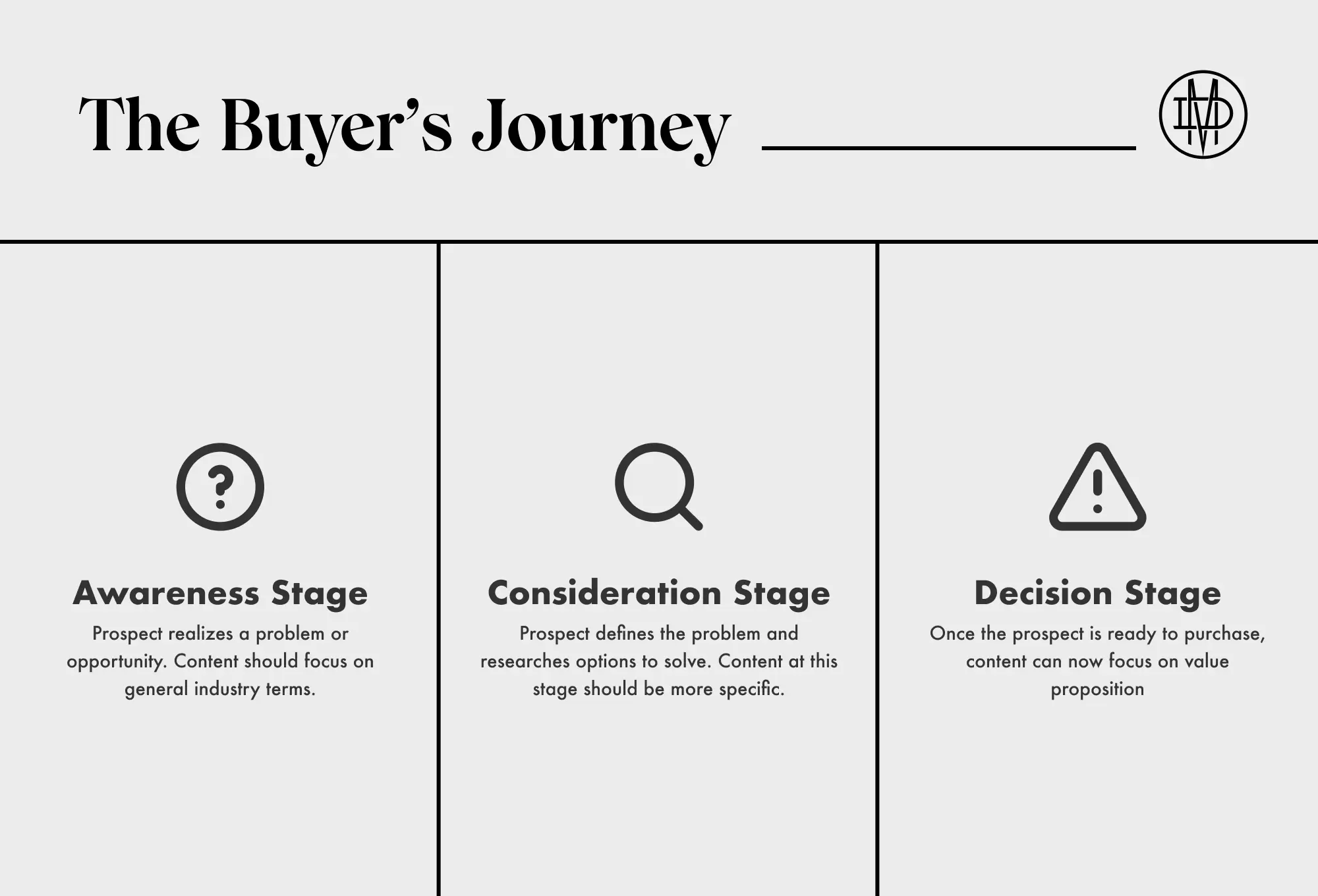
Content Marketing For The Buyers Journey
You want to make sure the type of content you are presenting to your audience reaches them at the right time, aligning with where they are in the buyers journey. The buyers journey has 4 main stages, though there are valid perspectives to have 3 or 5. At Optimal, we consider the following stages when creating our marketing strategies:
Awareness Stage – Top of Funnel
At this stage, your audience has just become aware of their problem and just starting to look for a solution. The focus of your marketing is to get in front of them. They are likely seeking information or education to more clearly understand their problem. Think along the lines of common searches that start with “How do I..” , “How to…”, or “Where to find..”
They are not quite ready to make a commitment to a brand, make a purchase, or talk to sales representative yet. This is the time to provide informational content, establishing yourself as an expert or thought leader.
Consideration Stage – Middle of Funnel
At this stage, the buyer has a good understanding of their problem. They are now starting to shop around to see which method, kind of solution, or brand is the best to solving that problem. This is the time to really showcase why YOU are the best solution to their problem, compared to competitors.
They are still not quite ready to make a commitment to a brand, make a purchase, or talk to sales representative yet, but they are closer to the intent to convert.
Conversion Stage – Bottom of Funnel
They are finally ready to convert! This could be making a purchase or being ready to talk to the sales team.
Advocacy Stage – Post-Purchase
These are your past or current customers who had an excellent experience, and are willing to tell their friends and colleagues.
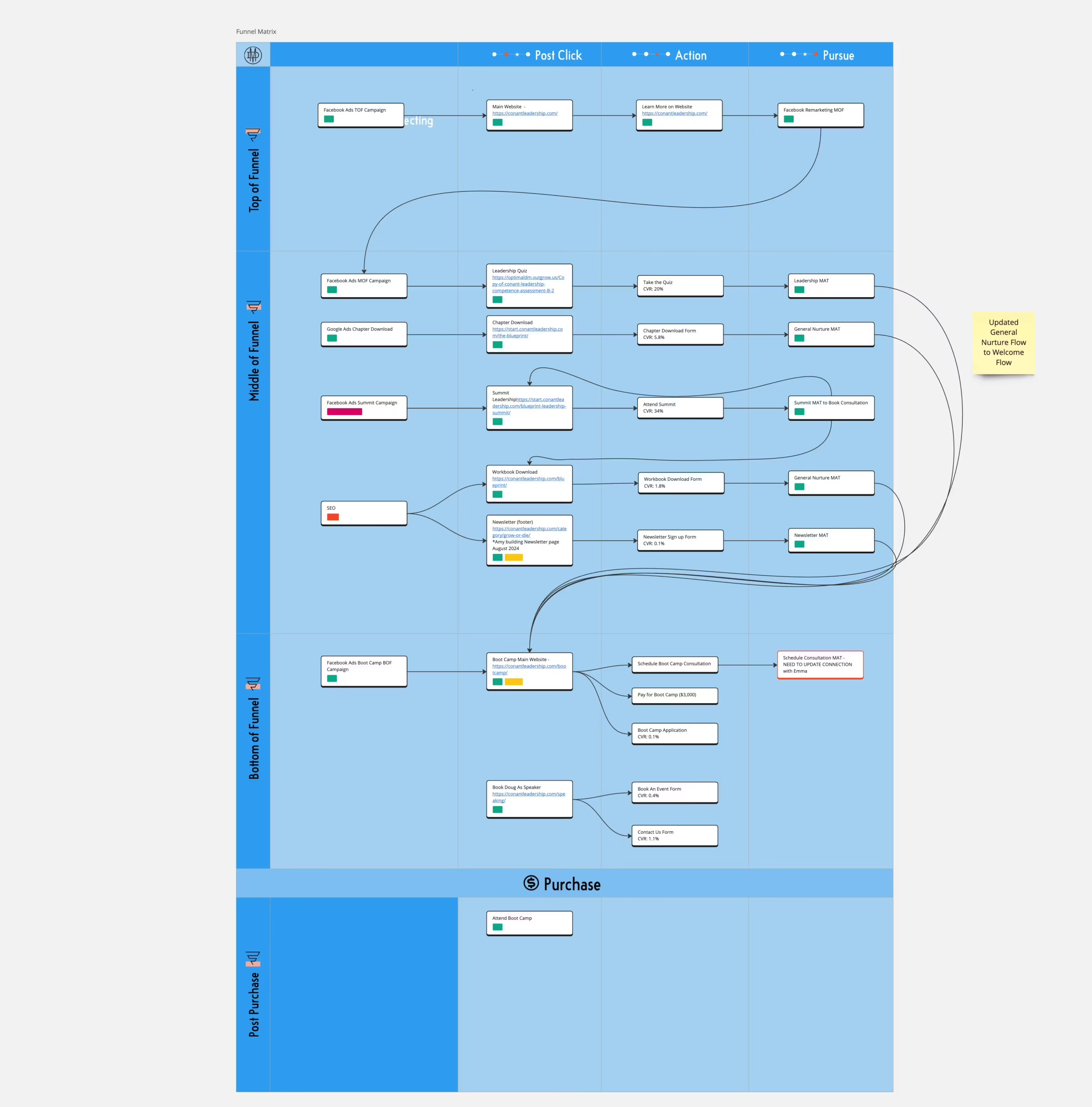
Holistically, you should have a full funnel view of your content. We use a custom designed tool called the Funnel Matrix to map our our client’ s marketing journey and accompanied content.
Planning Your Content
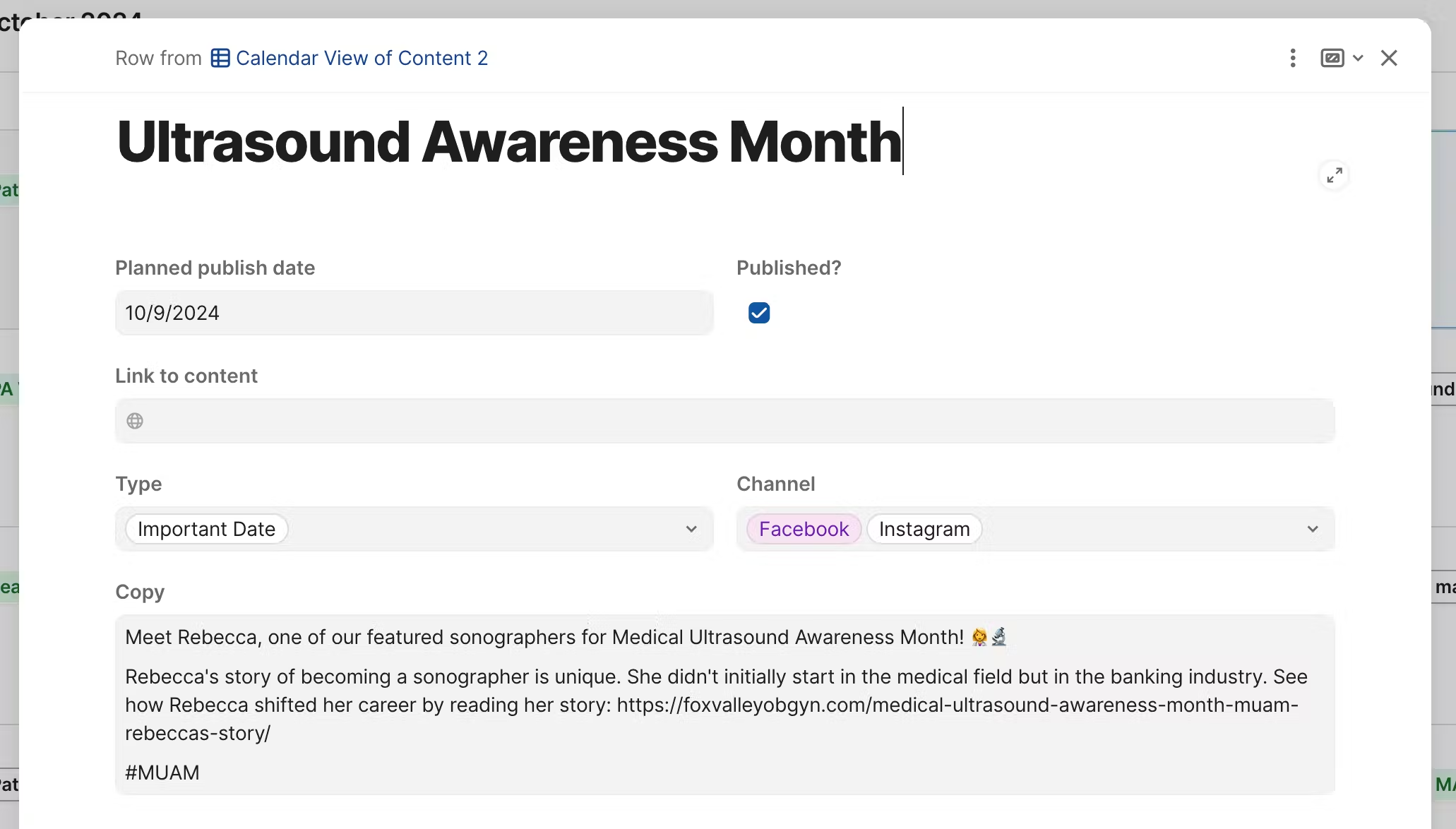
Once you have determined the type of content you want to create, you can now map our your content marketing plan. There are so many tools out there such as Canva, Notion, Click Up, and Coda. All are great, you just have to pick what works best for you. Whats more important is the type of information you can store, such as:
- Date to launch
- Audience Segment
- Platform
- Keywords if applicable, this is imperative for a an seo content strategy
- Images and copy, or link to final content piece if created elsewhere
- Landing page URL
We use Coda for our company content planning, as well as for our clients. Here is an example of a content marketing plan for one of our clients, whom we manage their organic social media.

Measuring Your Marketing Content ROI
Once you have launched your marketing content funnel, aligning with your buyers journey, you will want to track certain metrics to determine if they are working or not. The best way to do this is creating events in Google Analytics where you can measure the actions you want your audience to take, such as a whitepaper download. Higher conversion rates are usually a leading indicator. However, you will want to ensure you set up utm parameters in your CRM so you can fully see the customer journey and how your content pieces influenced their decision to convert. This will help you make decisions of the content is relevant and effective, or can be repurposed or optimized for better performance.
Conclusion
Having a data -backed content marketing strategy that speaks to your audience at the right time will help convert your target audience into customers. But its not enough to create the content, you have to analyze the results and use those insights to make adjustments. This is something Optimal excels in – if it sounds like too much to do, reach out and we can help!